



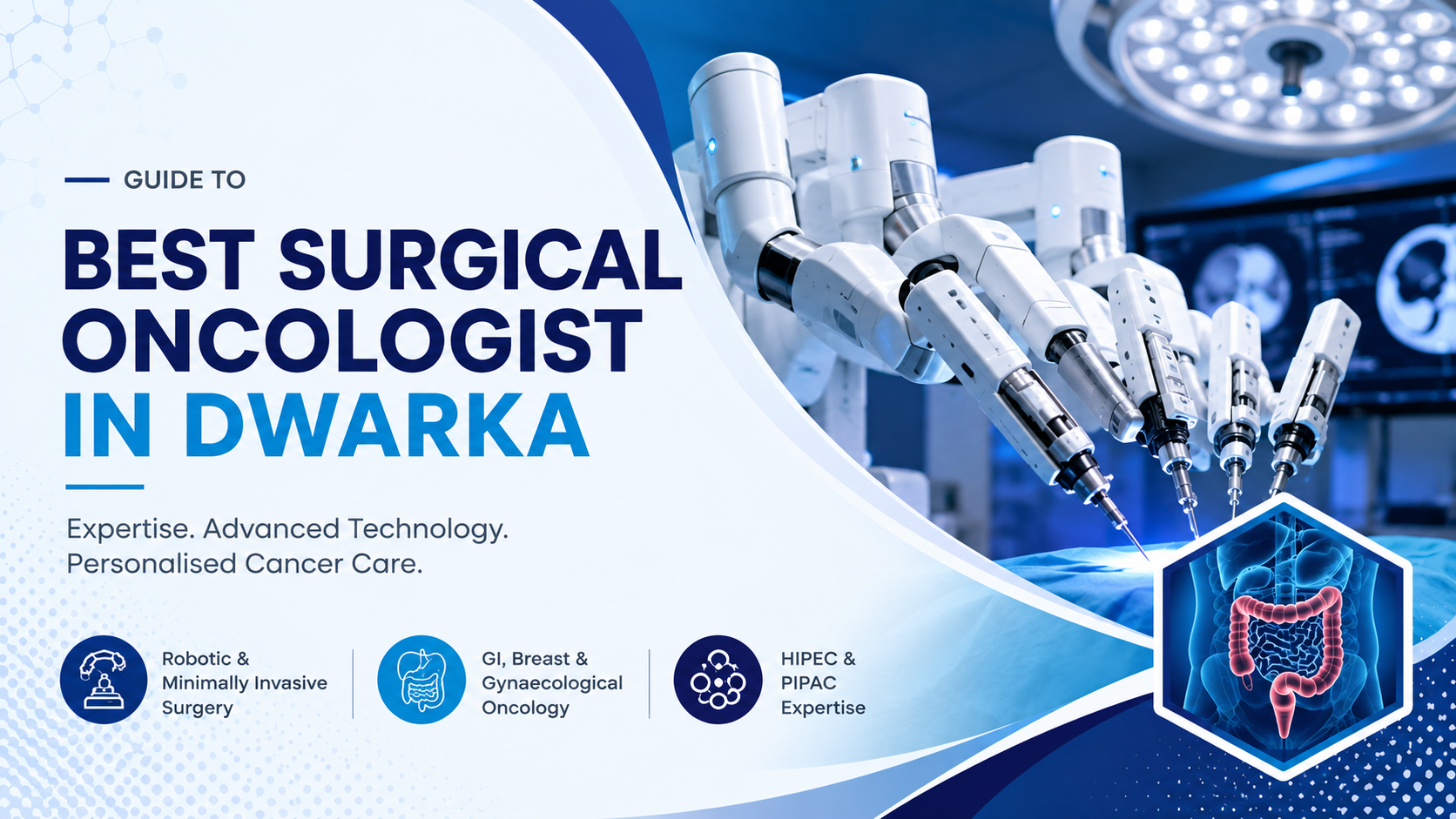
Finding the best surgical oncologist in Dwarka is an important decision when you or a loved one has been diagnosed with cancer and surgery has been recommended. Cancer surgery requires specialised expertise because every tumour is different in terms of its location, size, stage and relationship with surrounding organs.
Surgical Oncology Solutions (SOS), led by Dr. Anadi Pachaury & Team, provides specialised surgical cancer care for patients in Dwarka, Shalimar Bagh and across Delhi NCR. Dr. Anadi Pachaury & Team specialises in Robotic and Minimally Invasive Cancer Surgery, with expertise in Gastrointestinal (GI), Breast and Gynecological Oncology, along with advanced procedures such as HIPEC and PIPAC. The team also manages selected patients with lung cancer, oral cancer and prostate cancer, depending on the diagnosis, stage and suitability for surgical treatment.
At Surgical Oncology Solutions, the focus is not simply on performing cancer surgery but on determining whether surgery is appropriate, which surgical approach is most suitable, and how surgery should fit into the patient’s overall cancer treatment plan.
For patients searching for the best surgical oncologist in Dwarka, understanding the surgeon’s cancer-specific expertise, experience with advanced procedures and approach to personalised treatment can be more valuable than choosing a specialist based only on location or online ratings.
What Does a Surgical Oncologist Do?
A surgical oncologist is a cancer specialist trained specifically in the surgical management of solid tumours. Their role may include evaluating the tumour, determining whether surgery is appropriate, planning the procedure and surgically removing cancer while considering surrounding organs and tissues.
Depending on the cancer, surgery may be combined with chemotherapy, radiation therapy, immunotherapy or targeted therapy.
A surgical oncologist may be involved in the management of cancers involving:
- Gastrointestinal tract
- Colon and rectum
- Stomach
- Oesophagus
- Liver and gallbladder
- Pancreas
- Breast
- Ovary and uterus
- Cervix
- Lung
- Oral cavity and selected head and neck cancers
- Prostate
- Other selected solid tumours
The treatment approach depends on the patient’s individual diagnosis and cancer stage.
Why Choose an Experienced Surgical Oncologist in Dwarka?
Cancer surgery is significantly different from routine surgical procedures. It requires detailed knowledge of tumour biology, cancer staging, anatomy and the role of surgery within multidisciplinary cancer treatment.
When looking for the best surgical oncologist in Dwarka, patients should consider:
Cancer-Specific Experience
The surgeon’s experience with the specific type of cancer is an important factor. Complex gastrointestinal, breast, gynecological, thoracic, oral and advanced abdominal cancers may require specialised surgical expertise.
Advanced Surgical Techniques
Depending on the patient’s condition, the surgeon may consider minimally invasive or robotic-assisted surgery instead of conventional open surgery.
Multidisciplinary Cancer Care
Cancer treatment often requires collaboration between surgical oncologists, medical oncologists, radiation oncologists, radiologists, pathologists and other specialists.
Personalised Treatment Planning
The recommended procedure should be based on the patient’s cancer type, stage, imaging, pathology, overall health and previous treatment—not simply on the availability of a particular surgical technology.
Advanced Cancer Surgery at Surgical Oncology Solutions
At Surgical Oncology Solutions, advanced surgical approaches are considered for appropriately selected cancer patients.
Robotic Cancer Surgery
Robotic-assisted cancer surgery allows the surgeon to operate using specialised instruments controlled from a robotic surgical system.
Potential advantages in selected procedures may include enhanced visualisation, precise instrument movement and access to anatomically difficult areas.
However, robotic surgery is not appropriate for every cancer patient. The surgeon determines its suitability after evaluating the cancer and the patient’s overall condition.
Minimally Invasive Cancer Surgery
Laparoscopic and other minimally invasive techniques use smaller surgical incisions compared with many conventional open procedures.
For appropriately selected patients, these approaches may help reduce surgical trauma and support earlier recovery.
HIPEC
Hyperthermic Intraperitoneal Chemotherapy (HIPEC) is an advanced treatment approach used for selected cancers that have spread within the abdominal cavity.
It involves removing visible tumour deposits where possible and then delivering heated chemotherapy directly into the abdominal cavity.
HIPEC is a specialised procedure and is not suitable for every patient. Careful assessment by an experienced oncology team is essential.
PIPAC
Pressurized Intraperitoneal Aerosol Chemotherapy (PIPAC) is another specialised treatment approach for selected patients with peritoneal cancer.
The treatment delivers chemotherapy as a pressurised aerosol into the abdominal cavity through minimally invasive surgery. Its suitability depends on factors such as the patient’s cancer type, disease extent and previous treatments.
Cancers Managed by Surgical Oncology Solutions
Depending on the patient’s diagnosis and treatment requirements, surgical oncology services may be relevant for several types of solid tumours.
Gastrointestinal Cancers
This includes cancers of the:
- Oesophagus
- Stomach
- Colon
- Rectum
- Appendix
- Liver
- Gallbladder
- Pancreas
Treatment may involve conventional, laparoscopic, robotic or other advanced surgical approaches depending on the location and stage of the cancer.
Breast Cancer
Surgery is an important part of treatment for many breast cancer patients. The surgical approach may include breast-conserving procedures, mastectomy and lymph-node surgery depending on the individual diagnosis.
Treatment planning may also involve chemotherapy, radiation therapy, hormone therapy, targeted therapy or other treatments where appropriate.
Gynecological Cancers
Surgical treatment may be required for selected cancers of the ovary, uterus, cervix and other parts of the female reproductive system.
The appropriate surgical approach depends on the cancer type, stage, tumour characteristics and the patient’s overall health.
Lung Cancer
Lung cancer surgery may be considered for selected patients, particularly when the disease is localised and surgical removal is considered appropriate after comprehensive evaluation.
Depending on the location and extent of the tumour, surgical treatment may involve removal of part or all of the affected lung or other procedures as clinically appropriate.
Lung cancer treatment is often multidisciplinary and may involve medical oncology, radiation oncology, pulmonology, radiology and pathology in addition to surgical oncology.
Oral Cancer
Oral cancer surgery may be an important component of treatment for selected patients with cancers involving the mouth and oral cavity.
Surgical treatment can vary significantly depending on the location, size and stage of the tumour and whether nearby lymph nodes or other structures are involved.
Patients may require a multidisciplinary evaluation to determine the most appropriate combination of surgery, radiation therapy, chemotherapy or other cancer treatments.
Prostate Cancer
Prostate cancer may require surgical treatment in selected patients depending on factors such as cancer stage, tumour characteristics, overall health and treatment goals.
When surgery is recommended, the surgical approach is selected based on the individual patient’s clinical situation. Patients may also be evaluated for other treatment options such as radiation therapy or active surveillance where appropriate.
Advanced Abdominal and Peritoneal Cancers
Selected patients with advanced abdominal cancers may be evaluated for procedures such as cytoreductive surgery, HIPEC or PIPAC.
These treatments require careful patient selection and comprehensive assessment of the extent of disease, previous treatments and overall health.
How to Choose the Best Surgical Oncologist in Dwarka
Before choosing a cancer surgeon, consider asking:
- Does the surgeon have experience treating my specific cancer?
- Is the surgeon trained in advanced cancer surgery?
- Is minimally invasive or robotic surgery appropriate for my case?
- Does the team manage complex and advanced cancers?
- Is multidisciplinary oncology support available?
- What are the expected benefits and risks of surgery?
- Will chemotherapy or radiation be required before or after surgery?
- What should I expect during recovery?
A consultation should give you a clear understanding of your diagnosis and the reasoning behind the recommended treatment.
Why Patients Consider Surgical Oncology Solutions
Surgical Oncology Solutions (SOS) brings together specialised surgical expertise and advanced cancer treatment approaches under a patient-focused model.
Led by Dr. Anadi Pachaury & Team, the centre focuses on:
- Robotic cancer surgery
- Minimally invasive cancer surgery
- Gastrointestinal oncology
- Breast oncology
- Gynecological oncology
- Lung cancer surgery
- Oral cancer surgery
- Prostate cancer surgery
- Complex cancer surgery
- HIPEC
- PIPAC
The objective is to provide an evidence-based and personalised surgical plan based on each patient’s cancer type, stage and overall health.
For patients searching for the best surgical oncologist in Dwarka, the priority should be finding a specialist with relevant cancer-specific experience, advanced surgical expertise and a comprehensive approach to cancer treatment.
Frequently Asked Questions
Who is the best surgical oncologist in Dwarka?
The right surgical oncologist depends on your cancer type, stage and treatment requirements. Patients should evaluate the surgeon’s experience with their specific cancer, expertise in advanced procedures and access to multidisciplinary cancer care.
What types of cancer can a surgical oncologist treat?
Surgical oncologists may be involved in the management of several solid tumours, including gastrointestinal, breast, gynecological, lung, oral and prostate cancers, as well as selected advanced abdominal and peritoneal cancers.
Is surgery always required for cancer?
No. Surgery is not appropriate or necessary for every cancer patient. Treatment depends on the cancer type, stage, tumour characteristics, overall health and other clinical factors. Some patients may require chemotherapy, radiation therapy, immunotherapy, targeted therapy, active surveillance or a combination of treatments.
Is robotic surgery suitable for every cancer patient?
No. Robotic surgery is appropriate only for selected patients. The decision depends on the tumour’s location, size, stage, patient’s health and other clinical factors.
What is HIPEC?
HIPEC stands for Hyperthermic Intraperitoneal Chemotherapy. It is a specialised treatment in which heated chemotherapy is delivered directly into the abdominal cavity after appropriate surgical removal of visible disease in selected patients.
Should I get a second opinion before cancer surgery?
For major or complex cancer surgery, a second opinion can help you understand the diagnosis, available treatment options and recommended surgical approach.
Conclusion
Choosing a surgical oncologist is one of the most important decisions after a cancer diagnosis. Rather than selecting a specialist based only on the phrase “best surgical oncologist in Dwarka,” patients should look at cancer-specific experience, surgical expertise, advanced treatment options, multidisciplinary support and the quality of communication during consultation.
Surgical Oncology Solutions (SOS), led by Dr. Anadi Pachaury & Team, provides specialised cancer surgery with expertise in robotic and minimally invasive cancer surgery, GI oncology, breast oncology, gynecological oncology, lung cancer, oral cancer, prostate cancer, HIPEC and PIPAC.
If you or a family member has been diagnosed with cancer and surgery has been recommended, consult the team at Surgical Oncology Solutions to understand your diagnosis and explore the most appropriate treatment options.

