



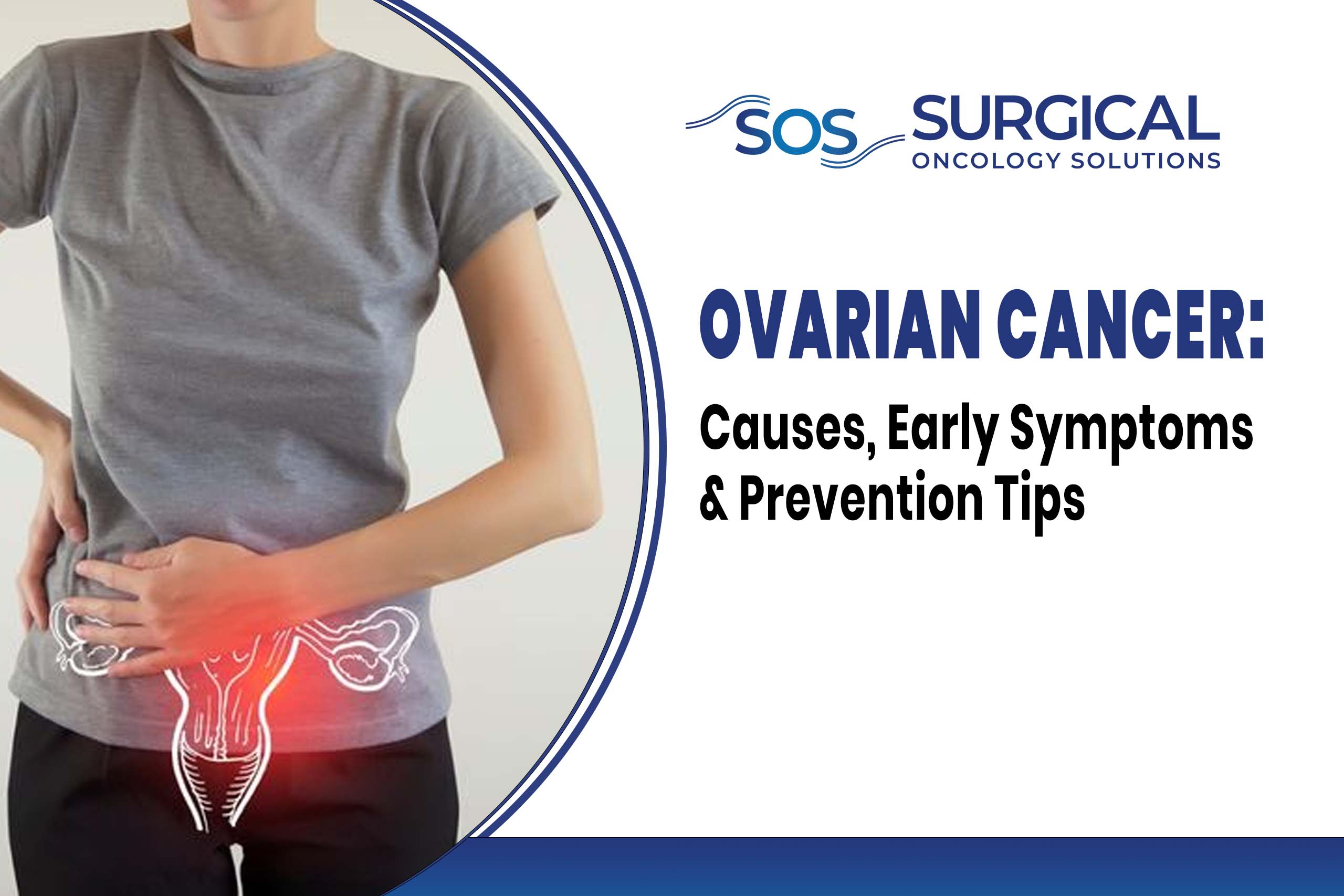
Ovarian cancer is the most common cancer in women. It is the silent killer since most of the women would not know that it is serious. This is the reason why early diagnosis and knowledge about the disease can contribute to curing the disease and survival to a great extent. It could be important that females are aware of the causes, the symptoms, and the information about the prevention.
What Is Ovarian Cancer?
The ovaries are the organs where the female hormones and ova are produced and the foundation of the growth of ovarian cancer. It has transpired that when the cells within the ovaries grow in odd and unmanageable ways in the form of tumours that cannot be controlled and when they are not treated, they can infiltrate other parts of the body.
Early Signs and Symptoms of Ovarian Cancer
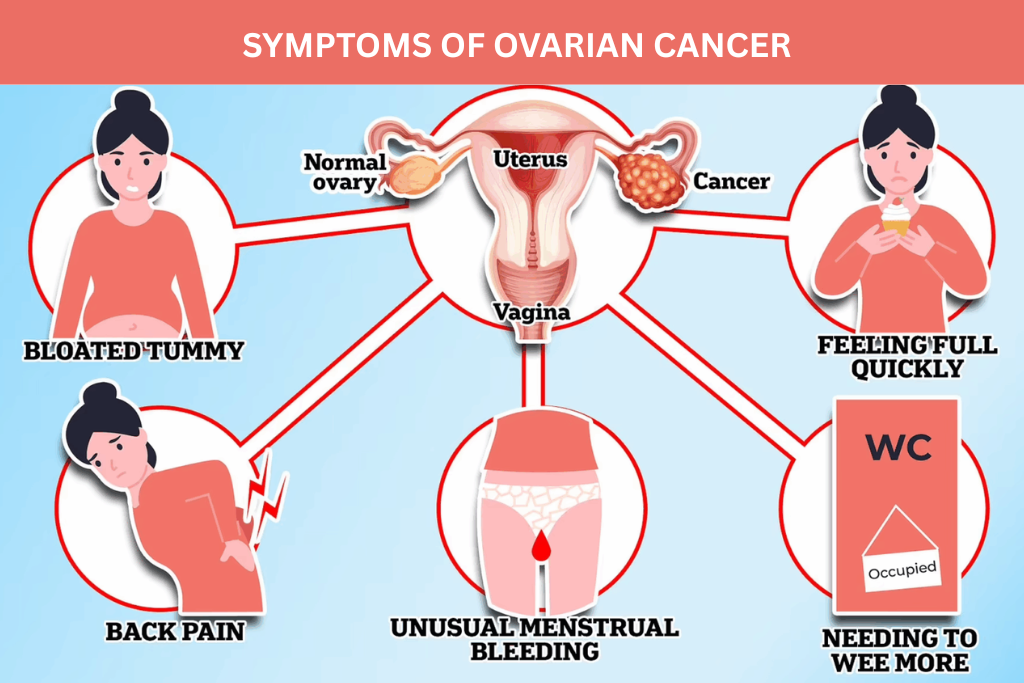
The biggest problem is that early symptoms look like normal stomach or period problems. Still, noticing such minor signs can save lives:
- One of the first and most common symptoms is persistent bloating that is not clear. This bloating doesn’t come and go -it stays all the time.
- Pain in the abdomen or pelvis that continues for over a few weeks cannot be disregarded. It can be as though cramping, like being heavy or even dull aching in the lower abdomen.
- Feeling full quickly or losing your appetite can be a sign that something is wrong. Accompanied by weight loss and fatigue, this change is observed by many women.
- Frequent or urgent urination, which is not accompanied by infection, may indicate the pressure exerted by a tumour on the bladder.
Back pain, constipation, irregular periods, pain during intercourse, and permanent fatigue are other correlated signs. When this condition lasts longer than two weeks, seek the attention of a specialist as soon as possible.
Ovarian Cancer Causes and Risk Factors
Ovarian cancer is not known to have a definite cause but there are factors that can predispose it.
- Age: Mostly over 50 years.
- Family history: There are close family members who died of ovarian, breast or colorectal cancer which puts an individual at risk.
- Genetic mutations: The mutations in the BRCA1 and BRCA2 genes are very likely to be the cause of ovarian cancer. Women are also more at risk of lynch syndrome.
- Reproductive History: No previous pregnancies, early menstrual period, or late menopause are said to be at risk.
- Hormone therapy: Oestrogen-only therapy during prolonged post-menopausal periods may also be a risk factor of cancer.
- Other disorders: There are other disorders that have been associated with a high risk which are endometriosis and obesity.
Reducing the risk on the other hand, can be done through pregnancy, breastfeeding, oral contraceptives, and under certain surgeries like tubal ligation.
Is Ovarian Cancer Hereditary?
Yes, 10-15 per cent of cases of ovarian cancer are the outcome of inherited genetic changes. The BRCA1 and BRCA2 genetic mutational changes can increase a woman with a risk of up to 40-50 in her life.
Women with a family history of related cancers need to consider genetic counselling and tests. Understanding that a single genetic make-up is likely to be applied to cause early intervention and enhance surveillance and preventive surgeries, or augment surveillance in some cases.
Can Ovarian Cancer Be Cured?
When the cancer is detected early, the chances of a cure are much higher. Ovarian cancer can be treated at a very early age, when it is localised in the ovaries and is very manageable. The basis of treatment is surgery to remove the tumour, normally followed by chemotherapy.
HIPEC (Heated Intraperitoneal Chemotherapy) and robot-assisted surgery have become modern methods that have rendered treatment more efficient and recovery easier.
In Surgical Oncology Solutions, we have been able to integrate experience and technology in order to deliver personalised, holistic care to the patient. We not only treat the disease but also make sure that we help the patients with emotional and physical assistance throughout the period of healing.
Ovarian Cancer Survival Rate
The stage of diagnosis is important in survival. When the cancer has not extended beyond the ovaries, then the five-year survival rate may be higher than 90% if it is detected at Stage I. However, diagnosing this early is unfortunate because you can only diagnose one in five cases.
This shows the importance of women being vigilant and having frequent health examinations. The recovery depends on age, health condition in general, the kind of cancer and the response to therapy.
Complications of Ovarian Cancer
Ovarian cancer can cause problems like fluid build-up in the stomach, blocked bowels, poor nutrition, or spreading to nearby organs. Other treatments, such as chemotherapy can cause fatigue, nerve pain or hormonal imbalances.
Expert Care When You Need It Most
At Surgical Oncology Solutions, Shalimar Bagh in New Delhi, we provide advanced cancer treatment using the latest methods such as robotic surgery, HIPEC, and minimally invasive procedures, and also they will give ovarian cancer prevention tips.
The consultations will be provided on Monday-Saturday (9 AM-5 PM), and the video consultations will be conducted during the weekends by an Ovarian Cancer Specialist. To get in touch with us or to make an appointment, you may contact us at +91-8218819398 (WhatsApp 24/7).
Frequently Asked Questions (FAQs)
Q1: How would you most likely manifest ovarian cancer?
Recurrent bloating, mostly accompanied by abdominal pain and fullness following a meal is mentioned as the most frequent and a symptom most often described.
Q2: At what age should women be advised to start screening against ovarian cancer?
Women above 50 years or those at a great risk of the disease will have to talk to their doctor about the screening. Women need to observe changes in their bodies and have regular check-ups on their pelvis.
Q3: Can ovarian cancer be detected using the Pap smear?
No, Pap smears are not used in the detection of cervical cancer. Ovarian cancer can be diagnosed through ultrasound, pelvic examination, CA-125 blood test or X-rays.
Q4: What is the mean number of years of treatment of ovarian cancer?
The treatment period is fixed, yet the surgery is normally accompanied with 36 months of chemotherapy. The oncologist will implement a course of action that will meet the needs of individual patients.
Q5: Does ovarian cancer become aggressive in relation to other types of cancer?
It is also violent as it is normally discovered late. However, modern treatment combined with early diagnosis has greatly improved the prognosis.

