



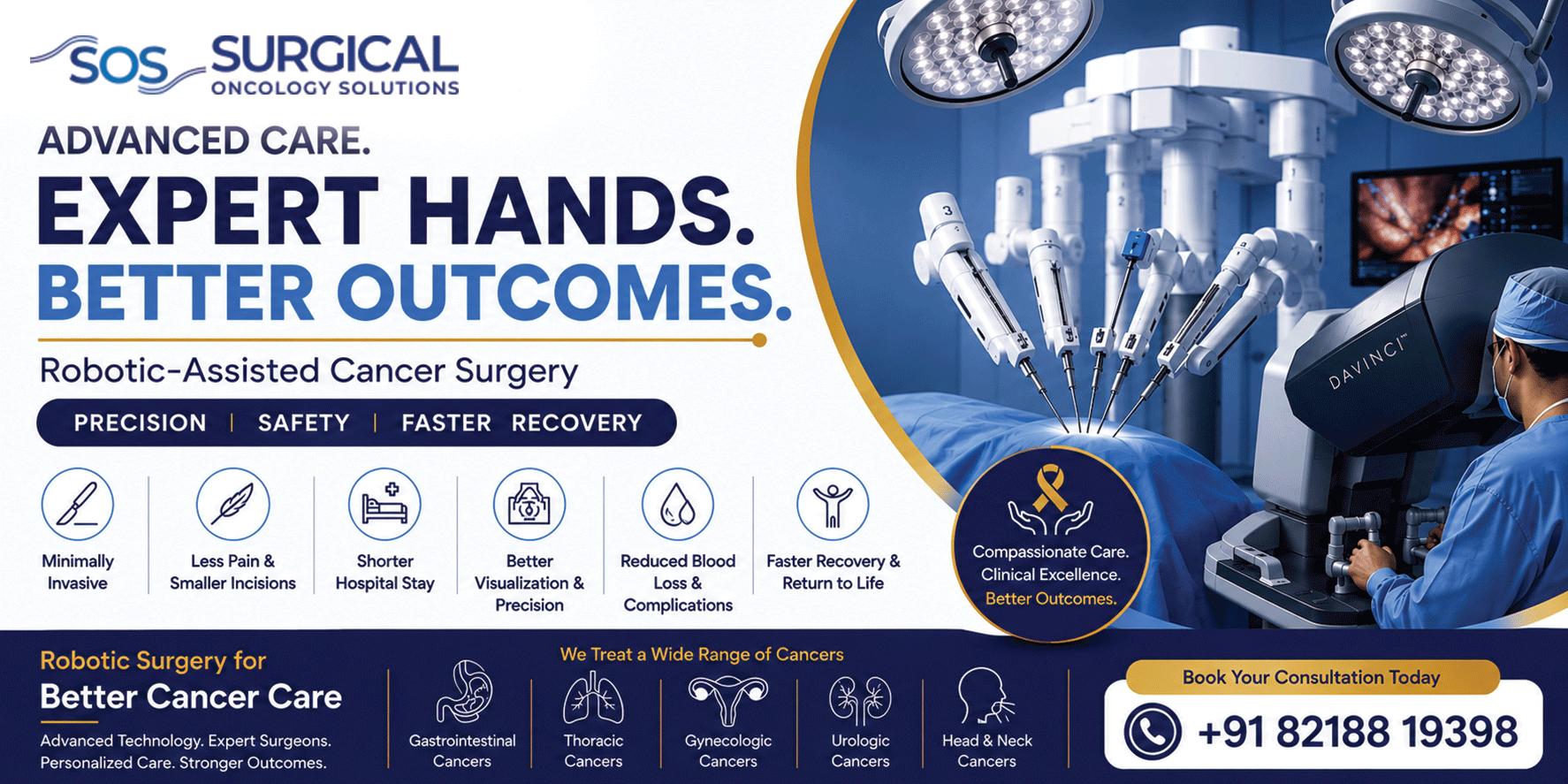
Receiving a cancer diagnosis can be life-changing, but advances in surgical oncology have transformed the way many cancers are treated. Today, robotic-assisted surgery enables surgeons to perform complex cancer operations with exceptional precision through minimally invasive techniques. For many patients, this can mean less pain, smaller incisions, shorter hospital stays, and a faster return to daily life when clinically appropriate. Robotic-assisted surgery is increasingly being used for selected gastrointestinal, thoracic, gynecologic, and urologic cancers at advanced cancer centres.
If you’re searching for the best robotic cancer treatment in Dwarka, Delhi, it’s important to understand what robotic surgery is, when it is recommended, and why choosing an experienced surgical oncology team matters more than the technology alone.
At Surgical Oncology Solutions, we believe that successful cancer treatment combines advanced technology with experienced surgical expertise, multidisciplinary planning, and compassionate patient care.
What Is Robotic Cancer Surgery?
Robotic cancer surgery is an advanced form of minimally invasive surgery in which the surgeon operates using robotic instruments from a specialized console.
Crucial Note: The robotic system does not perform the surgery independently—it translates the surgeon’s hand movements into highly precise, controlled movements of miniature surgical instruments while providing a magnified 3D view of the surgical field.
This enhanced visualization and precision can help surgeons operate safely in anatomically complex areas while preserving surrounding healthy tissues whenever possible.
Which Cancers Can Be Treated with Robotic Surgery?
Robotic-assisted surgery may be recommended for selected patients with:
- Gastrointestinal (GI) Cancers: Colon, rectal, stomach, and esophageal cancer.
- Thoracic Cancers: Lung cancer and mediastinal tumors.
- Gynecologic Cancers: Endometrial, cervical, and selected ovarian cancers.
- Urologic Cancers: Prostate, kidney, and bladder cancer.
- Head & Neck Cancers: Selected oral and throat cancers using transoral robotic approaches.
Whether robotic surgery is suitable depends on the cancer’s type, stage, location, and the patient’s overall health. A comprehensive evaluation is essential before making this decision.
Benefits of Robotic Cancer Surgery
When clinically appropriate, robotic-assisted surgery offers several potential benefits compared with traditional open surgery:
- Smaller incisions & minimal scarring
- Less postoperative pain
- Reduced blood loss & lower risk of wound complications
- Better visualization during surgery
- Greater surgical precision
- Shorter hospital stays & faster recovery
- Earlier return to routine activities
While these advantages are well documented for many procedures, outcomes vary depending on the patient’s condition, cancer stage, and the experience of the surgical team.
Is Robotic Surgery Better Than Open Surgery?
There is no single “best” surgical approach for every patient.
Robotic surgery is particularly beneficial for carefully selected cases where minimally invasive access can safely achieve the same cancer control as open surgery. However, some advanced or complex cancers may still require traditional open surgery to ensure complete tumour removal.
An experienced surgical oncologist will recommend the approach that offers the greatest chance of successful cancer treatment while prioritizing patient safety.
What Happens Before Robotic Cancer Surgery?
Before surgery, patients undergo a structured, comprehensive evaluation that may include:
- Clinical consultation
- MRI or CT scan
- PET-CT (when indicated)
- Biopsy confirmation
- Blood investigations
- Anaesthesia assessment
- Multidisciplinary tumour board review
This thorough planning ensures that every treatment recommendation is completely individualized and evidence-based.
Recovery After Robotic Cancer Surgery
Recovery varies depending on the type of surgery performed. However, many patients experience:
- Early mobilization
- Reduced postoperative discomfort
- Shorter hospital admission
- Faster return to eating and walking
- Earlier return to work and normal activities
Your healthcare team will provide detailed guidance regarding wound care, diet, physical activity, medications, and follow-up appointments.
Why Experience Matters More Than Technology
One of the biggest misconceptions is that the robot performs the surgery. In reality:
- The robot never makes independent decisions.
- Every movement is fully controlled by the surgeon.
- Surgical planning, tumour removal, reconstruction, and decision-making remain entirely the responsibility of the operating surgeon.
This is why choosing an experienced robotic surgical oncologist is far more important than choosing a hospital based solely on the availability of robotic technology.
Why Choose Surgical Oncology Solutions for Best Robotic Cancer Treatment in Dwarka?
At Surgical Oncology Solutions, our focus is on delivering personalized, evidence-based cancer care through a multidisciplinary approach. Our expertise includes:
- Advanced robotic and minimally invasive cancer surgery
- Gastrointestinal and thoracic cancer surgery
- Gynecologic oncology surgery
- Complex abdominal cancer surgery & HIPEC for selected cancers
- Comprehensive cancer diagnosis and treatment planning
- Long-term survivorship and follow-up care
Every patient receives an individualized treatment plan based on international oncology guidelines, clinical evidence, and multidisciplinary expert discussions.
Frequently Asked Questions
Is robotic surgery safe for cancer treatment?
Yes. Robotic-assisted surgery is considered a safe and effective option for many cancers when performed by an experienced surgical oncology team and when the patient is an appropriate candidate.
Does robotic surgery completely remove cancer?
The goal of robotic surgery is complete tumour removal with appropriate surgical margins. Success depends on factors such as the type and stage of cancer, overall health, and timely treatment.
Is robotic surgery painful?
Most patients experience significantly less postoperative pain compared with traditional open surgery because robotic procedures use much smaller incisions.
How long does recovery take?
Recovery varies by procedure, but many patients recover more quickly than after open surgery, enjoying shorter hospital stays and an earlier return to daily activities.
Conclusion
Finding the best robotic cancer treatment in Dwarka, Delhi involves more than choosing a hospital with advanced technology. The most important factors are the expertise of the surgical oncologist, accurate diagnosis, multidisciplinary treatment planning, and personalized care.
At Surgical Oncology Solutions, we combine advanced robotic and minimally invasive surgical techniques with evidence-based cancer care to help patients achieve the best possible outcomes. Our goal is not only to treat cancer effectively but also to support every patient throughout their treatment journey with compassion, precision, and expertise.
This guide is based on current surgical oncology principles. Robotic platforms enhance surgical precision and minimally invasive access, but their benefits depend heavily on careful patient selection and surgeon expertise.
Book a consultation with Surgical Oncology Solutions today to learn whether robotic-assisted cancer surgery is the right option for your condition.

